February 2026 This outlook examines February’s developments across security, economics, and politics; from cartel destabilization in Mexico and the first official meeting of the Board of Peace, to US-Iran escalation, energy market volatility, Ukraine’s prolonged attrition, and electoral shifts in Asia. While these cases span regions and issue areas, they are not isolated. Each reflects systems operating under tighter constraints, whether military, economic, demographic, or institutional. Read our overview For an in-depth analysis download our full report here!
Dispatch from Rome: February 2026
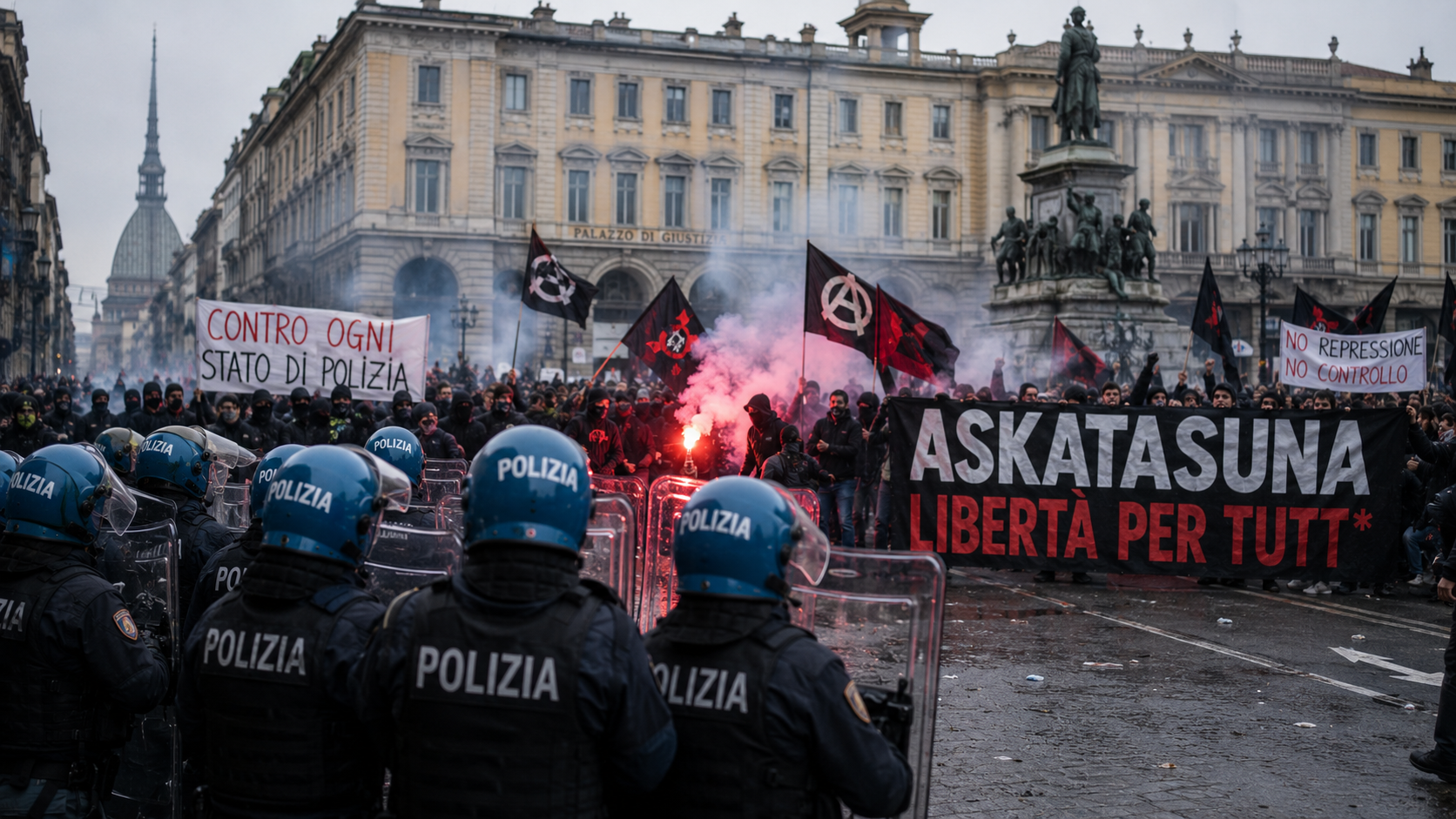
February 2026 The Haizum Italian Insider Report is a monthly news service that monitors the most relevant issues in Italy. This document focuses on political, Economic, and Strategic matters, considering the role of Italy within the European Union, the MENA region, and Transatlantic Relations. The report will deliver clever insights by leveraging Haizum’s deep connections in the national institutional ecosystem. READING TIME: 15 MINUTES Disclaimer: This Report is proprietary and confidential and may not be copied, quoted, referenced, or distributed in any format without the express written approval of Haizum Strategic Government Affairs (“Haizum”). Any violation of the foregoing may result in material harm to Haizum. The views expressed reflect public information or the personal views of the members of Haizum’s Team and in case reflect the view in a general context as expressed in the newsletter and may not represent a view on a specific case. Views expressed are as of the date hereof and Haizum does not undertake to advise you of any changes in the views expressed herein. Opinions or statements regarding financial market trends are based on current market conditions and are subject to change without notice. It should not be assumed that Haizum has made or will make investment recommendations now or in the future irrespective of the views expressed herein. Haizum does make any representation or warranty, express or implied, as to the accuracy or completeness of the information contained in this newsletter and nothing contained herein shall be relied upon as a promise or representation whether as to the past or future performance. Certain factual pieces of information contained herein have been obtained from third-party sources. It has not been independently verified by Haizum and although Haizum believes it to be reliable, Haizum makes no representation as to its accuracy or completeness. This Newsletter is intended solely for informational purposes. It is not investment advice and should not be considered to be a recommendation to buy or sell any type of securities or investments or as an indication that any security is suitable for a particular person. Haizum also may have potential conflicts of interest, including that some of Haizum’s officers, directors, and/or employees may be investors in the securities directly or indirectly. No assurance can be given that any risk management framework described herein will achieve its objective. EXECUTIVE SUMMARY February 2026 confirmed a structural change already visible in late 2025: Italy’s domestic political competition is increasingly “securitized,” with executive legitimacy and institutional checks becoming central drivers of policy design. The month was defined by a dual shock: a public-order escalation (violent unrest in Turin linked to the Askatasuna mobilization) and an institutional escalation (a justice referendum campaign increasingly framed as a contest over state authority, judicial autonomy, and democratic mandate). The government’s operating pattern reflected this dual pressure: rapid normative action, followed by institutional calibration—most visibly through interventions and constraints emerging from the Presidency of the Republic. The Turin unrest became a catalytic event for the government’s security posture. The Prime Minister publicly framed the episode as a direct attack on the State and state representatives, while the Interior Minister described the antagonistic networks as a threat to democracy. This political framing is not only communicative: it functions as a policy justification for expanding preventive tools, strengthening police operational protections, and upgrading infrastructure security as a “state functionality” priority. At the same time, the Quirinale’s role as constitutional balancer was visible and consequential. Presidential remarks and requests for changes—reported extensively in early February—led to substantive adjustments in two politically sensitive measures: (i) the “preventive stop/detention” mechanism linked to demonstrations and violent infiltration risks; and (ii) the “penal shield” architecture for law enforcement actions in justification contexts. The outcome is a security package that preserves the executive’s direction but narrows triggers and strengthens safeguards, illustrating a key governance rule in Italy: securitization is politically effective only when it remains institutionally defensible. Economically, February was concentrated around energy affordability, fiscal credibility, and competitiveness. Decree-law No. 21 (20 February) was framed as an urgent intervention to reduce electricity and gas costs, but the title and structure also reveal a broader industrial logic: competitiveness and decarbonization are explicitly linked to resolving “virtual saturation” of the power grid and integrating data centers into the electricity system—an indicator that digital infrastructure capacity is being treated as a strategic competitiveness variable rather than only a private-sector investment issue. Public-finance signals reinforced the government’s “supervised stability” posture. Bank of Italy data published in mid-February reported public debt at €3,095.5 billion as of end-2025 and a 2025 borrowing requirement of €109.2 billion, anchoring the fiscal constraint within which the government is attempting to combine visible interventions (energy relief; security decree) with reputational stability. Internationally, Italy’s February posture ran along two axes. On Ukraine, the government used procedural discipline—confidence votes and rapid conversion—to stabilize policy and to “discipline” coalition margins at a moment of internal tension, with the conversion law extending authorization to transfer military equipment to Ukraine through 31 December 2026. On the Middle East, the “Board of Peace” initiative created a narrow corridor: Italy sought operational relevance through training/support offers while emphasizing constitutional constraints and EU alignment; the Foreign Ministry publicly communicated the observer posture as a legally coherent approach to a politically sensitive architecture. Finally, February indicated a reconfiguration risk inside the EU’s internal political geometry. The Meloni–Merz initiative to convene a pre-summit on competitiveness signaled alignment around deregulation and single-market centrality, while Franco-Italian relations became intermittently strained—visible in the postponement of the Toulouse bilateral summit planned for April. This dual movement suggests Italy is attempting to raise leverage through a Rome–Berlin competitiveness corridor even at the cost of tactical friction with Paris. SUMMARY February 2026 consolidated a trend already visible in the second half of 2025: domestic political competition in Italy is progressively “securitized,” driven by two vectors that shaped both executive agenda-setting and parliamentary framing. The first vector concerns public-order pressure. The month opened with violent unrest in Turin linked to the Askatasuna mobilization, which