March 2026 The geopolitical landscape this month is defined by overlapping conflicts that have put pressure on global stability. A direct US-Israel military escalation against Iran has led to the functional closure of the Strait of Hormuz, triggering a worldwide energy emergency and a 48-hour ultimatum from Washington. This regional volatility is compounded by the ongoing conflict between Israel and Palestine and intensified West Bank violence, which remain central to Middle Eastern instability. Meanwhile, Russia’s Spring Offensive in Ukraine continues with little progress, and France’s municipal elections have signaled a historic domestic shift, further straining the Western alliance as leaders navigate a fragmented, multi-theater reality. Read our overview For an in-depth analysis download our full report here!
Dispatch from Washington: March 2026
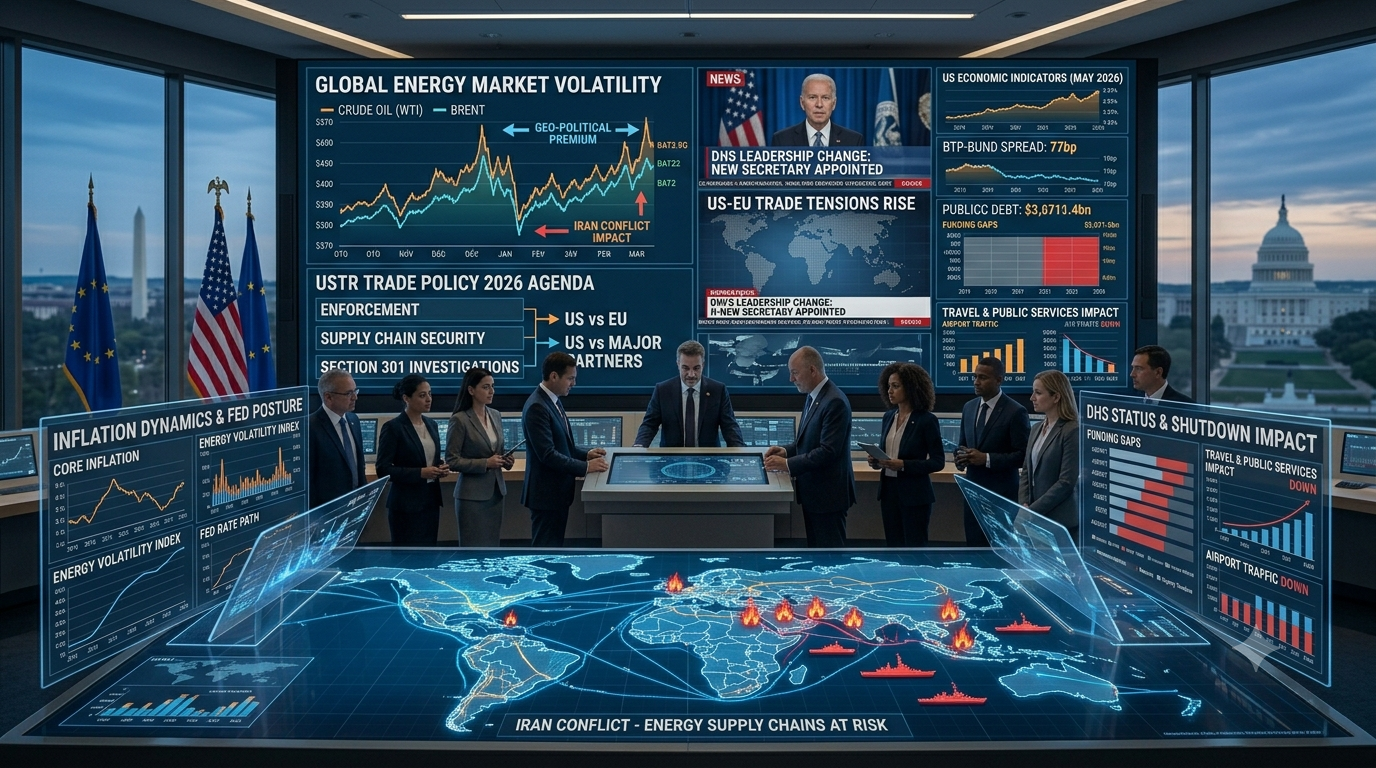
March 2026 The Haizum Washington Dispatch is a monthly intelligence briefing that monitors the most relevant political, economic, regulatory, and strategic developments in the United States. This document focuses on federal policymaking, national security, trade, technology, and macroeconomic dynamics, considering the role of Washington within transatlantic relations, Indo-Pacific strategy, and global geopolitical competition. The report delivers high-level insights by leveraging Haizum’s deep network across the US institutional, policy, and strategic affairs ecosystem. READING TIME: 15 MINUTES This newsletter was prepared for Haizum Strategic Government Affairs. Haizum maintains exclusive rights to circulate this product. All statements of fact and expressions of opinion contained herein are the sole responsibility of the author. This newsletter was produced on Monday, November 24. Developments after that date will be covered in the next issue. SUMMARY Evolving inflation dynamics are being shaped in part by energy market volatility and the Federal Reserve’s corresponding policy posture. The escalation of the Iran conflict is contributing to significant disruption in global energy supply chains and pricing. The partial government shutdown and ongoing funding negotiations for the Department of Homeland Security are affecting agency operations and creating downstream impacts on travel and public services. Leadership changes at the Department of Homeland Security are occurring amid heightened operational and policy pressures. The release of the USTR’s 2026 Trade Policy Agenda outlines the administration’s priorities on trade enforcement, supply chains, and economic security. New Section 301 investigations signal a potential escalation in US trade actions targeting the European Union and other major trading partners. Inflation Outlook Shifts as Fed Turns More Cautious Amid Energy-Driven Risks At the start of 2026, expectations centered on a more dovish Federal Reserve, with markets anticipating a series of rate cuts as inflation cooled and labor market conditions softened. That outlook has shifted materially in recent weeks. While inflation had been moderating, hovering near 2.4% year-over-year, the emergence of sustained energy price pressures has complicated the trajectory. Federal Reserve Chair Jerome Powell has emphasized a markedly more cautious stance, signaling that the central bank is now prioritizing inflation risks over earlier expectations of policy easing. The primary driver of this shift is the sharp rise in oil and energy prices due to the war with Iran (see next section), which is feeding into broader inflation expectations and financial markets. Higher fuel costs are already pushing up input prices across sectors and raising concerns that inflation could reaccelerate after several months of improvement. As a result, market expectations have been repriced. Earlier projections of multiple rate cuts in 2026 have largely faded, with investors now anticipating a prolonged pause, and in some scenarios, even a rate hike if inflation proves persistent. The Federal Reserve has responded by holding rates steady while adopting a “wait-and-see” posture, closely monitoring how energy-driven price increases transmit through the broader economy. Policymakers are particularly focused on whether rising energy costs will remain contained or trigger a broader inflationary cycle. For the Fed, the policy challenge has become more acute: balancing the risk of renewed inflation against signs of slowing growth. The result is a narrower path forward, in which the previously expected pivot toward easing has been delayed, and potentially overtaken by a more uncertain, inflation-sensitive environment. Iran Conflict Triggers Global Energy Shock The escalating conflict involving Iran has triggered a profound disruption in global energy markets, with early indicators pointing to one of the most significant supply shocks in recent years. While the broader geopolitical situation continues to evolve, the immediate economic impact is being felt through sharp volatility in oil and gas markets and rising concerns over sustained supply constraints. At the center of the disruption is the Strait of Hormuz, a critical maritime chokepoint through which roughly 20% of global oil supply transits. Heightened military activity and credible threats to shipping have disrupted tanker flows and injected significant uncertainty into global energy logistics. In some scenarios, analysts warn that a sustained closure or severe restriction of traffic through the Strait of Hormuz could trigger a cascading global economic shock, given the lack of immediate alternative routes for Gulf exports. Markets have reacted swiftly. Oil prices have surged as traders price in both immediate supply disruptions and a longer-term geopolitical risk premium. The International Energy Agency (IEA) has warned that the situation represents a structural inflection point for global energy markets. IEA Executive Director Fatih Birol noted that this could be a historic energy shock with far-reaching consequences for global markets and energy security. In response, the United States and allied countries are taking steps to stabilize markets, including discussions around coordinated releases from strategic petroleum reserves and expanded maritime security operations to protect commercial shipping. Governments, particularly those in Europe, are accelerating efforts to reduce dependence on vulnerable energy supply chains, including renewed focus on diversification and energy transition strategies. For Europe, the implications are especially acute. Already sensitive to external energy shocks, European economies face heightened exposure to price volatility and potential supply constraints, raising the risk of renewed inflationary pressure and economic slowdown. There are reports that President Trump has sent a 15-point plan to Iran, via Pakistan, intended to help bring the war to a close. Even if the immediate crisis stabilizes, analysts expect a lasting impact. The conflict is likely to embed a higher geopolitical risk premium in global energy markets, reinforcing the strategic importance of energy security and reshaping policy and investment decisions well beyond the conflict’s duration. DHS Funding Standoff Continues as Travel Disruptions Mount and Deal Remains Elusive A partial shutdown of the Department of Homeland Security (DHS) continues as lawmakers remain deadlocked over a funding agreement, with negotiations ongoing but no deal yet enacted. While Senate and White House negotiators have signaled progress toward a potential agreement, any resolution must still pass both the House and Senate. This has left DHS operations still mostly paused with major disruptions for tens of millions of Americans. The operational impact is already becoming visible, particularly in the
Dispatch from Rome: March 2026
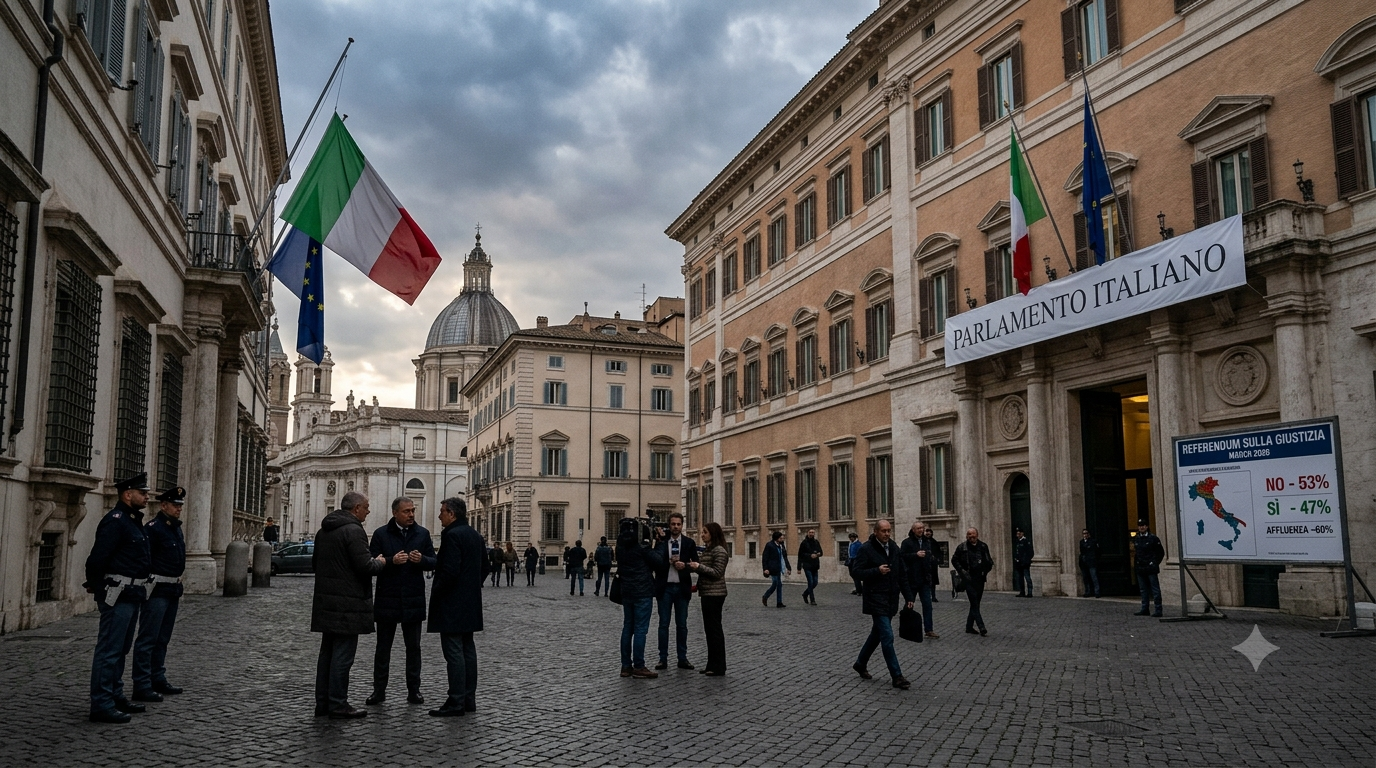
March 2026 The Haizum Italian Insider Report is a monthly news service that monitors the most relevant issues in Italy. This document focuses on political, Economic, and Strategic matters, considering the role of Italy within the European Union, the MENA region, and Transatlantic Relations. The report will deliver clever insights by leveraging Haizum’s deep connections in the national institutional ecosystem. READING TIME: 15 MINUTES Disclaimer: This Report is proprietary and confidential and may not be copied, quoted, referenced, or distributed in any format without the express written approval of Haizum Strategic Government Affairs (“Haizum”). Any violation of the foregoing may result in material harm to Haizum. The views expressed reflect public information or the personal views of the members of Haizum’s Team and in case reflect the view in a general context as expressed in the newsletter and may not represent a view on a specific case. Views expressed are as of the date hereof and Haizum does not undertake to advise you of any changes in the views expressed herein. Opinions or statements regarding financial market trends are based on current market conditions and are subject to change without notice. It should not be assumed that Haizum has made or will make investment recommendations now or in the future irrespective of the views expressed herein. Haizum does make any representation or warranty, express or implied, as to the accuracy or completeness of the information contained in this newsletter and nothing contained herein shall be relied upon as a promise or representation whether as to the past or future performance. Certain factual pieces of information contained herein have been obtained from third-party sources. It has not been independently verified by Haizum and although Haizum believes it to be reliable, Haizum makes no representation as to its accuracy or completeness. This Newsletter is intended solely for informational purposes. It is not investment advice and should not be considered to be a recommendation to buy or sell any type of securities or investments or as an indication that any security is suitable for a particular person. Haizum also may have potential conflicts of interest, including that some of Haizum’s officers, directors, and/or employees may be investors in the securities directly or indirectly. No assurance can be given that any risk management framework described herein will achieve its objective. SUMMARY March 2026 marked a more compressed and exposed phase for Italy, where domestic political strain intersected with geopolitical tensions and a fragile economic backdrop. The key event was the rejection of the justice reform referendum, with the “No” vote exceeding 50% and turnout near 60%, turning the result into a broader judgment on the government’s credibility. The government responded with limited resignations and internal adjustments, aiming to contain political damage while preserving overall stability and reinforcing parliamentary discipline. At the same time, escalating tensions in the Gulf, affecting critical routes like Hormuz, pushed energy security and defense to the forefront, strengthening Italy’s alignment with NATO and EU partners. Economically, conditions remained stable but constrained: inflation rose modestly, public debt stayed above €3.1 trillion, and industrial production remained weak despite solid demand for retail sovereign bonds. Overall, Italy entered a more defensive phase, balancing political pressure, external risks, and limited fiscal flexibility. INSTITUTIONS Legislative Parliamentary activity in March was marked by legislative compression and political reframing. The Chamber of Deputies and Senate remained focused on decree conversion but also became the arena through which the majority sought to regain control of the narrative after the referendum setback, turning legislative procedure into a tool of political stabilization. The security decree, identified in the updated material as DL 23/2026, emerged as one of the central tracks of parliamentary activity. Its scope extended beyond conventional public-order measures to include infrastructure protection, hybrid threats, deferred arrest mechanisms, and wider administrative powers for prefects. The expansion of the decree’s perimeter reflected mounting concern over vulnerabilities affecting strategic systems, including sabotage episodes involving railway infrastructure and a broader sense that domestic security risks were becoming more tightly linked to resilience and continuity of service. Alongside this, the energy decree, DL 21/2026, remained a key legislative dossier, with Article 8 introducing a unified authorization process for data centers with fixed timelines and centralized coordination, highlighting a shift toward treating digital infrastructure as part of a wider energy competitiveness strategy. Confidence votes were used systematically on politically sensitive measures, reinforcing coalition discipline and limiting internal divisions after the referendum. Toward the end of the month, attention shifted to electoral reform, with discussions on preference voting and the majority premium signaling an effort to move the political agenda beyond the failed justice reform and reopen strategic initiative. Government Government action in March followed a logic of shock containment and repositioning. After the referendum defeat, the executive responded in a controlled way: politically exposed figures linked to the reform were replaced or reassigned, while the overall government structure remained intact, limiting reputational damage without signaling instability. At the same time, control over Parliament tightened. Confidence votes and procedural compression were used to pass legislation and maintain coalition cohesion, reflecting a shift from the more proactive stance of late 2025 to a more defensive approach focused on stability and damage control. Externally, rising tensions in the Gulf pushed the government into a more alert posture. Defense Minister Crosetto stressed stronger NATO coordination and increased monitoring of strategic assets, amid growing concern over energy routes and national security risks. Energy policy remained central, with the government balancing price volatility and fiscal credibility. Public messaging framed rising fuel and gas pressures largely as the result of external instability, helping preserve political legitimacy while acknowledging structural vulnerabilities. Policy Initiatives Three policy trajectories consolidated during March. First, a more explicit hybrid resilience framework emerged, driven by cyberattacks on infrastructure linked to Milan-Cortina and diplomatic systems. This reinforced the idea that cyber defense, infrastructure protection, and law enforcement must be managed in an integrated way. Second, energy-industrial integration strengthened as a strategic priority. Bringing data centers into